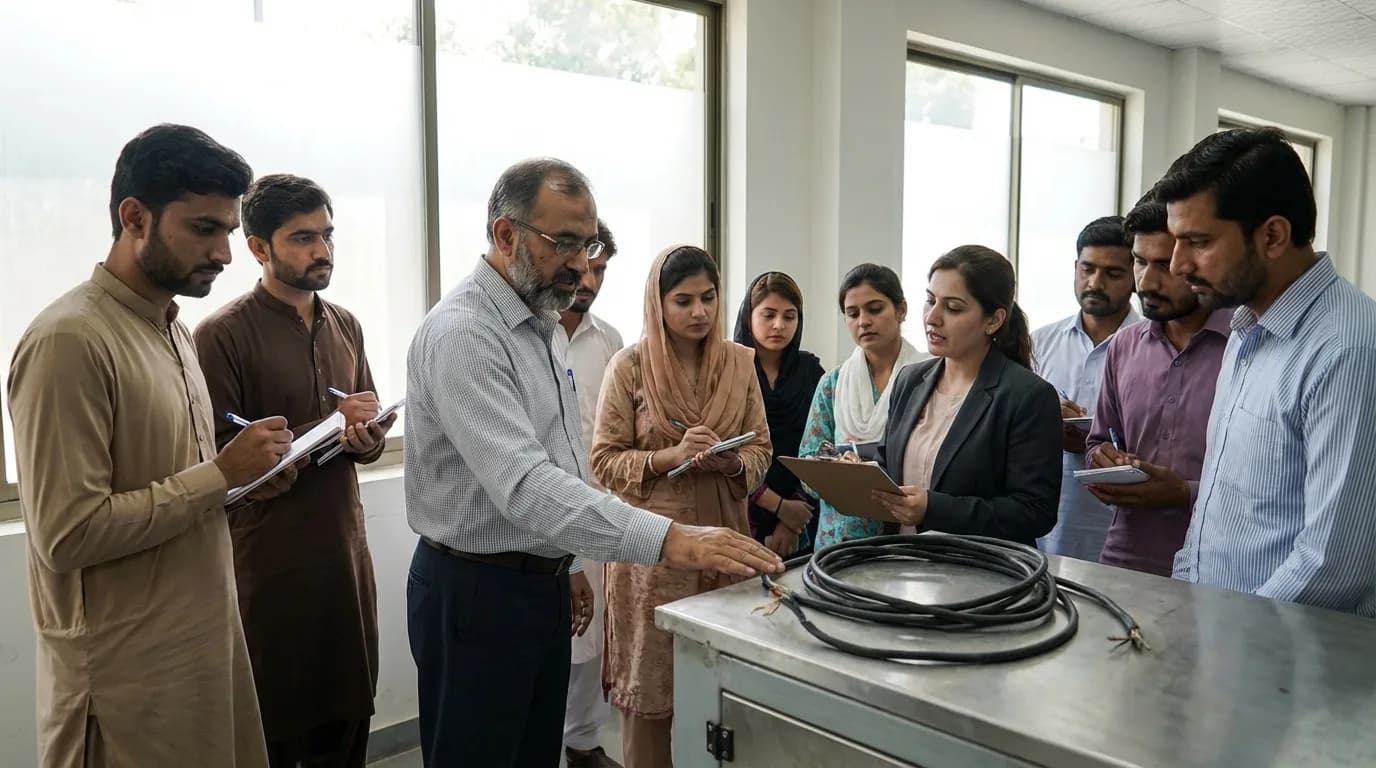

ICTQual Level 5 Diploma in Chemical Engineering
The ICTQual Level 5 Diploma in Chemical Engineering is a two-year, 240-credit qualification covering process design, thermodynamics, chemical reactions, materials science, and environmental sustainability for senior technical roles.
Course Features
This industry-recognised diploma combines advanced theoretical knowledge with practical application across 24 mandatory units delivered over four semesters, preparing graduates for diverse chemical engineering roles.
240 credits awarded over a two-year programme across four semesters
24 mandatory study units covering core and advanced chemical engineering topics
Evidence and assignment-based assessment methodology
Blend of theoretical instruction and hands-on laboratory practice
Flexible learning options including online, in-person, or blended delivery
Pathway to Level 6 and Level 7 qualifications and professional certifications
About This Course
The ICTQual Level 5 Diploma in Chemical Engineering is an advanced qualification awarded by ICTQual AB, designed to equip learners with specialised knowledge and technical skills required to excel in the field of chemical engineering. This comprehensive two-year programme covers a wide range of essential topics including thermodynamics, process control, fluid mechanics, chemical reaction engineering, separation processes, and materials science. With a strong emphasis on practical application, the course integrates laboratory-based work, real-world case studies, and industry-relevant projects.
Comprehensive coverage of chemical engineering principles from foundational to advanced level
Industry-recognised 240-credit qualification awarded by ICTQual AB
Strong emphasis on practical laboratory skills and process simulation
Covers sustainable engineering solutions and renewable energy technologies
Includes an independent research project in chemical engineering
Suitable for both new learners and experienced professionals seeking formal certification
What You'll Learn
Upon successful completion of this diploma, learners will have achieved a wide range of learning outcomes aligned with the official ICTQual AB qualification specification.
Apply fundamental and advanced chemical engineering principles to solve real-world process challenges
Perform mass and energy balance calculations and evaluate process efficiency in chemical systems
Design and analyse fluid flow systems, heat exchangers, and chemical reactors for industrial applications
Develop control strategies for industrial chemical processes using modern instrumentation and sensors
Use process simulation tools to design, analyse, and optimise chemical processes and evaluate economic feasibility
Conduct independent research on a chemical engineering topic and present findings through detailed reports
Who Should Attend
This qualification is designed for individuals who are passionate about pursuing or advancing a career in chemical engineering, whether they are new entrants to the field or experienced professionals seeking formal recognition of their skills.
Aspiring chemical engineers seeking to build a strong foundation in the discipline
Engineering technicians or technologists wishing to specialise in chemical engineering
Recent graduates of Level 3 or Level 4 engineering programmes looking to further their studies
Industry professionals in chemical, manufacturing, or process sectors seeking career advancement
Professionals interested in sustainable engineering practices and renewable energy technologies
Individuals from related fields such as chemistry, physics, or environmental sciences seeking a career change
Entry Requirements
To enrol in the ICTQual Level 5 Diploma in Chemical Engineering, applicants must meet the following entry requirements as specified by ICTQual AB.
Learners must hold a Level 4 qualification such as a diploma or certificate in a related field, with a background in chemistry, physics, mathematics, or engineering; must be at least 18 years old; and demonstrate proficiency in English and basic computer skills
Assessments
The ICTQual Level 5 Diploma in Chemical Engineering uses an evidence and assignment-based assessment approach. Learners are required to complete 24 mandatory assessments corresponding to each study unit, designed to evaluate comprehension and practical application of course material. All assessments must be passed to achieve the qualification.
Written assignments based on each unit's learning outcomes
Practical laboratory assessments and experimental reports
Research project report and professional presentation
Portfolio of evidence demonstrating competence across all study units
Progression
Completing the ICTQual Level 5 Diploma in Chemical Engineering opens numerous academic and professional progression opportunities, enabling graduates to advance in the chemical engineering industry or continue their education.
Progress to Level 6 or Level 7 diplomas in chemical engineering or related disciplines
Pursue professional certifications with organisations such as the Institution of Chemical Engineers (IChemE)
Enter employment as a process technician, junior chemical engineer, quality assurance specialist, or project coordinator
Apply for top-up degree programmes in chemical engineering at university level
Curriculum
- Role of chemical engineering in industrial processes
- Fundamental concepts of mass transfer, fluid flow, and heat exchange
- Application of core engineering principles to chemical process problems
- Advanced mathematical techniques for engineering problem-solving
- Interpretation and analysis of statistical data relevant to chemical processes
- Development of mathematical models for process simulations
- Mass and energy balance calculations for chemical systems
- Evaluation of process efficiency and resource utilisation
- Application of conservation principles to real-world scenarios
- Thermodynamic principles related to energy and material transformations
- First and second laws of thermodynamics and their applications
- Phase equilibrium and thermodynamic properties of substances
- Chemical principles underpinning engineering processes
- Chemical reactions, stoichiometry, and kinetics
- Behaviour of materials in various chemical environments
- Fluid properties and their impact on process systems
- Design and analysis of fluid flow systems using Bernoulli's equation
- Engineering problems involving pumps, turbines, and pipe networks
- Conduction, convection, and radiation heat transfer mechanisms
- Design and analysis of heat exchangers for industrial applications
- Thermal efficiency evaluation and heat transfer system optimisation
- Key chemical industries including petrochemical, pharmaceutical, and food processing
- Industrial processes from raw material to final product
- Economic and environmental factors in chemical production
- Material behaviour under stress, strain, and temperature variations
- Evaluation of materials for chemical engineering applications
- Failure modes analysis and material selection for specific processes
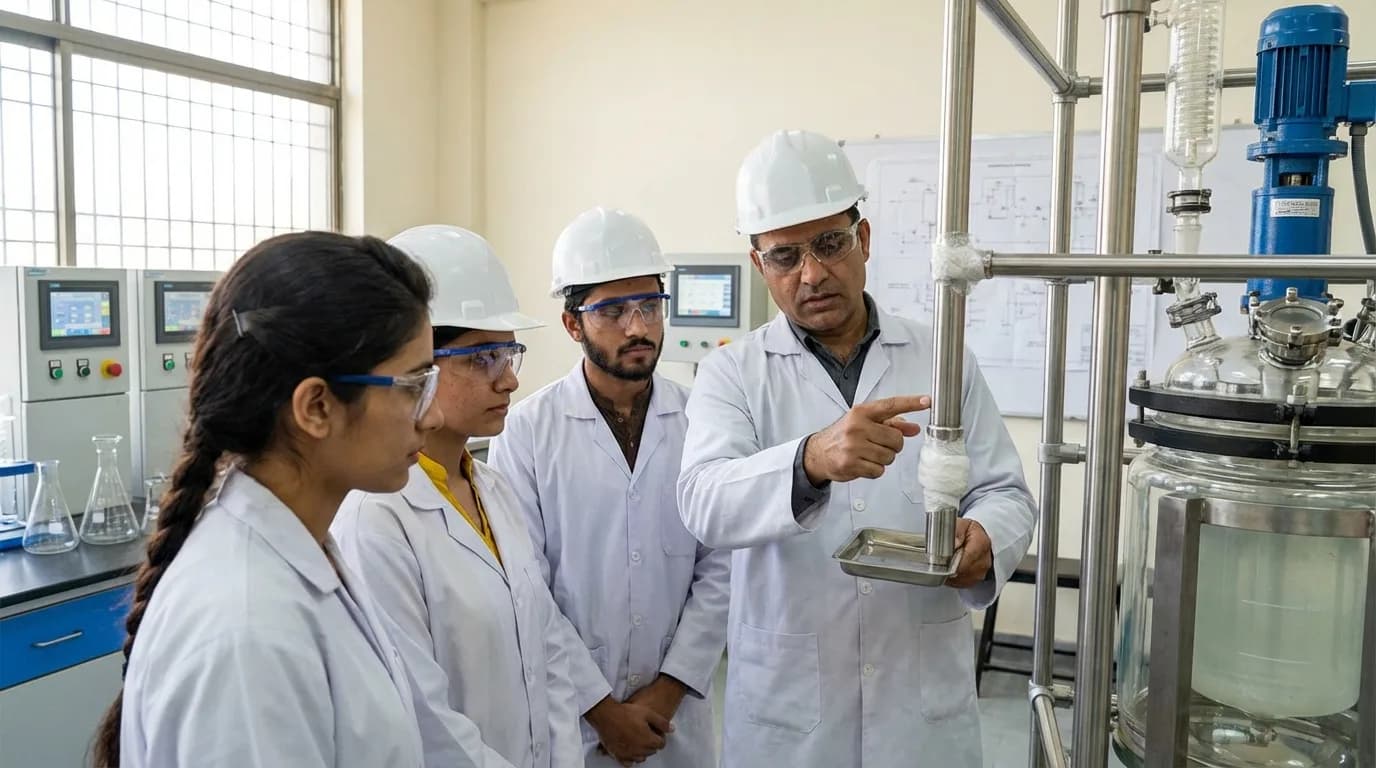
- Practical laboratory skills for chemical analysis and engineering experiments
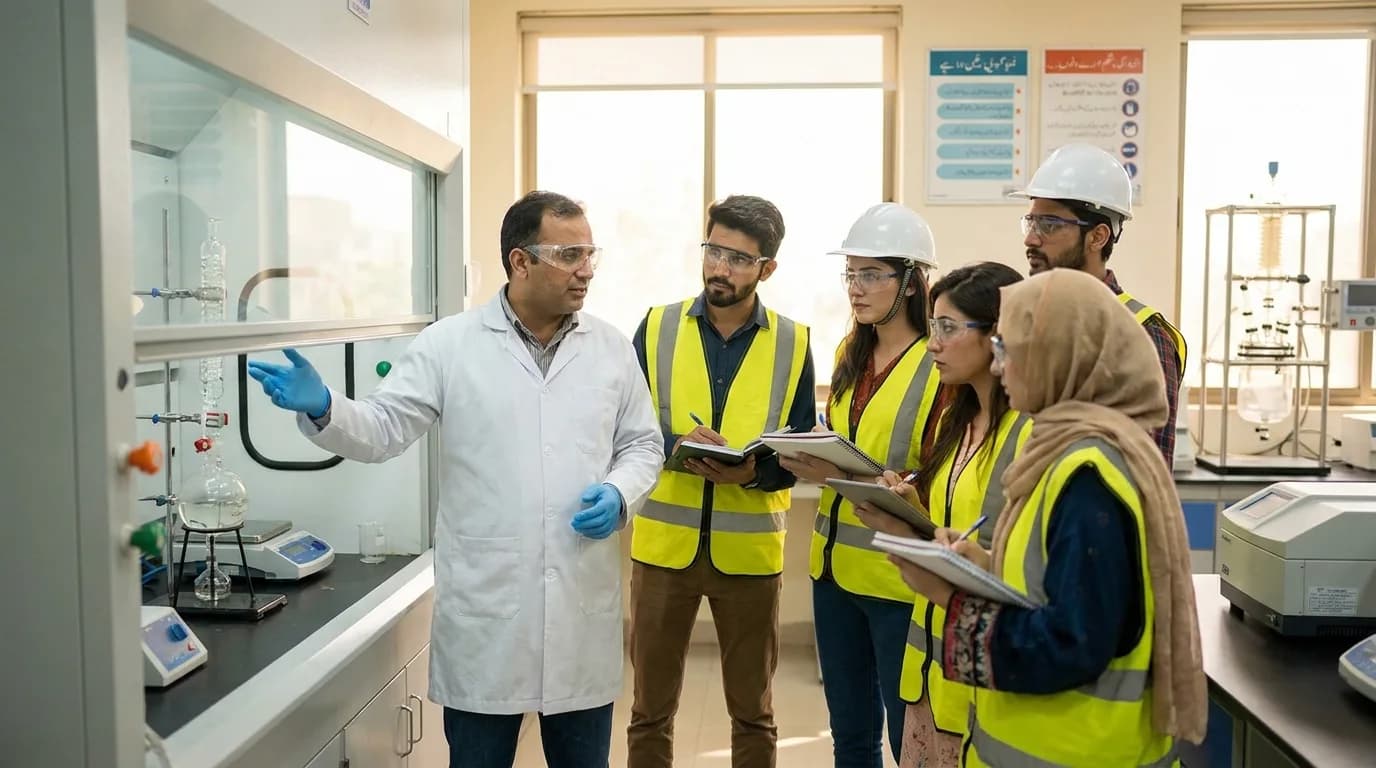
- Safety protocols and risk assessments in laboratory environments
- Recording, analysing, and interpreting experimental data
- Environmental impacts of chemical engineering processes
- Sustainable engineering solutions for waste management and energy efficiency
- Regulatory requirements for environmental protection
- Technical writing skills for clear and concise communication
- Preparation of comprehensive engineering reports and documentation
- Presentation of technical findings to varied audiences
- Advanced thermodynamic cycles and systems
- Complex problems involving multi-phase and non-ideal systems
- Thermodynamic principles applied to optimise industrial processes
- Advanced fluid dynamics concepts including turbulence and compressible flow
- Design and optimisation of fluid transport systems
- Computational tools for modelling fluid behaviour in engineering systems
- Process control principles including feedback and feedforward systems
- Design of control strategies for industrial chemical processes
- Modern instrumentation and sensors for process monitoring
- Reaction kinetics and reactor design
- Optimisation of chemical reactors for efficiency and safety
- Modelling techniques to scale up reactions from laboratory to industrial settings
- Principles of separation techniques such as distillation, filtration, and chromatography
- Design and evaluation of industrial separation systems
- Optimisation of separation processes for cost and energy efficiency
- Risk analysis associated with chemical engineering processes
- Development of safety management plans and emergency protocols
- Compliance with health and safety regulations in industrial environments
- Use of simulation tools to design and analyse chemical processes
- Development of process flow diagrams and identification of optimisation opportunities
- Economic feasibility evaluation of chemical process designs
- Complex separation techniques including membrane processes and crystallisation
- Design of advanced systems for high-purity product requirements
- Environmental impact assessment of separation technologies
- Energy systems and their applications in chemical engineering
- Renewable energy technology solutions in process industries
- Energy efficiency and sustainability evaluation in industrial processes
- Complex reaction mechanisms and multi-reaction systems
- Optimisation of catalytic and non-catalytic reactions in industrial reactors
- Computational tools for modelling and simulating reaction engineering systems
- Planning, execution, and monitoring of industrial engineering projects
- Application of project management tools and techniques to chemical process industries
- Management of project scope, resources, and budgets
- Independent research on a chemical engineering topic
- Application of theoretical knowledge to practical problems through experiments or simulations
- Presentation of research findings through detailed reports and professional presentations
Application Form
Apply Now For This Course
An adviser will review your eligibility for ICTQual Level 5 Diploma in Chemical Engineering and reply within 1–2 working days.
Course includes:
 LevelLevel 5
 Awarding bodyICTQual AB
 Lessons72
- CertificationYes

Related Diplomas
More courses in Chemical Safety that may suit a similar workplace role.

Featured Courses
Popular programmes professionals often explore next.