
ICTQual Level 3 Award in Emergency Response: AED
The ICTQual Level 3 Award in Emergency Response: AED equips learners with essential lifesaving skills, including CPR, AED operation, and emergency assessment techniques to respond effectively to cardiac arrest situations in diverse environments.
Course Features
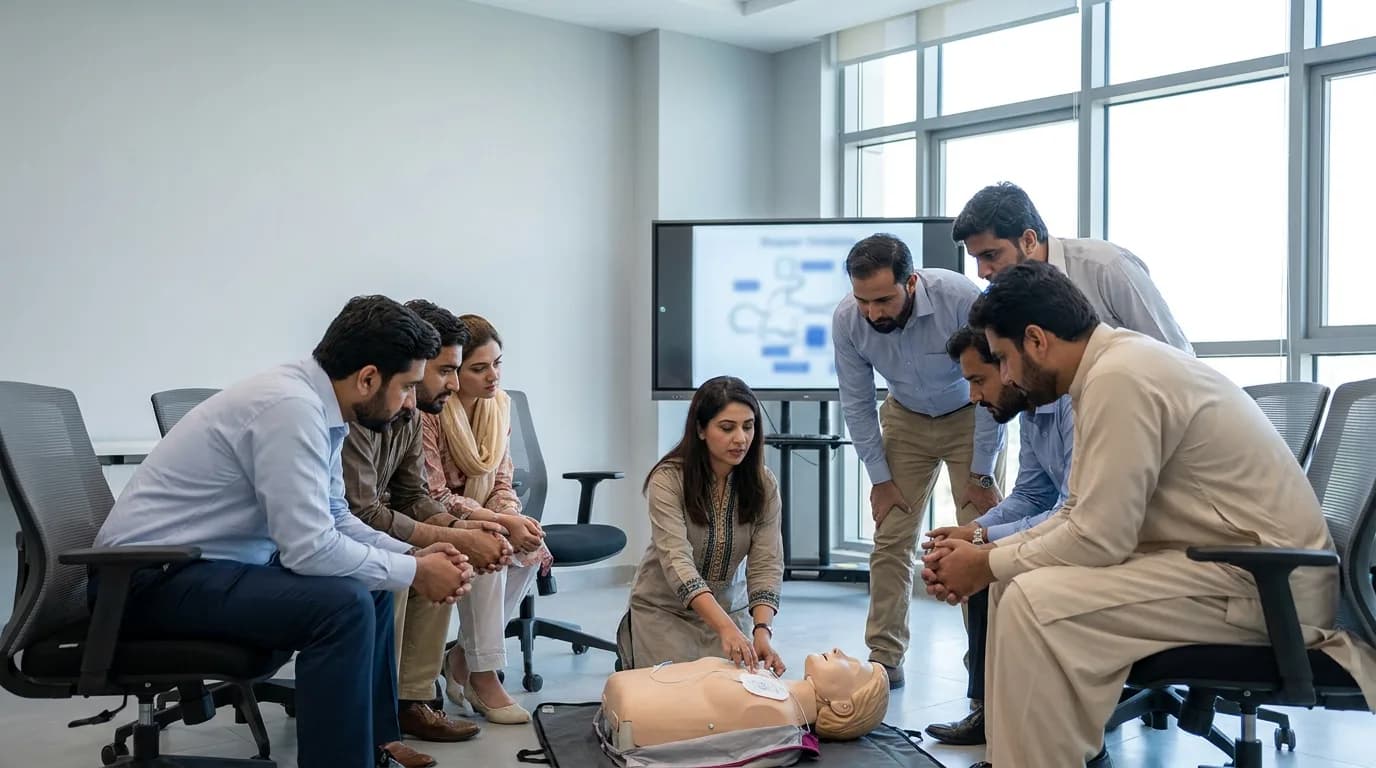
The ICTQual Level 3 Award in Emergency Response: AED is a practical, competency-based qualification designed to develop confidence and capability in responding to cardiac emergencies using CPR and AED technology in line with international emergency care standards.
Internationally recognised emergency response qualification
Focus on CPR, AED use, and cardiac emergency management
Practical, hands-on training with scenario-based learning
Suitable for workplace and community responders
No prior medical experience required
Aligned with global first aid and resuscitation guidelines
About This Course
The ICTQual Level 3 Award in Emergency Response: AED is designed to provide learners with the essential knowledge and practical skills required to respond effectively to life-threatening cardiac emergencies. The course focuses on rapid assessment, cardiopulmonary resuscitation (CPR), and safe use of automated external defibrillators (AEDs) in accordance with recognised emergency care standards.
Develops CPR and AED operational competence
Builds confidence in managing cardiac arrest emergencies
Strengthens workplace and public safety preparedness
Enhances decision-making under pressure in emergencies
Promotes compliance with health and safety standards
Supports progression into advanced first aid qualifications
What You'll Learn
This course develops essential emergency response competencies required to manage cardiac arrest situations safely and effectively using CPR and AED intervention techniques.
Recognise and assess cardiac arrest emergencies
Perform high-quality cardiopulmonary resuscitation (CPR)
Operate an automated external defibrillator (AED) safely and correctly
Coordinate CPR and AED use in emergency scenarios
Apply safety procedures for rescuers, casualties, and bystanders
Understand post-resuscitation care and emergency reporting procedures
Who Should Attend
This qualification is intended for individuals who want to gain practical lifesaving skills for workplace, community, or personal emergency preparedness. It is suitable for both beginners and professionals.
Healthcare assistants and clinical support staff
Workplace first aiders and safety officers
Teachers, coaches, and childcare professionals
Security personnel and emergency wardens
Fitness instructors and sports staff
Members of the general public seeking lifesaving skills
Entry Requirements
The ICTQual Level 3 Award in Emergency Response: AED has minimal entry barriers and is accessible to a wide range of learners, provided they meet basic physical and communication requirements.
Minimum age of 18 years recommended for enrolment
Basic literacy and numeracy skills for understanding course content
Assessments
Assessment is designed to evaluate both theoretical understanding and practical competence in emergency response procedures, particularly CPR and AED operation.
Multiple-choice question (MCQ) assessment
Practical skills demonstration in simulated emergencies
Scenario-based evaluation of CPR and AED use
Tutor observation of competence during training activities
Progression
This qualification provides a strong foundation for further development in first aid, emergency care, and health and safety roles across multiple industries.
ICTQual Level 3 Award in Emergency First Aid at Work
ICTQual Level 3 Certificate in First Aid and CPR
Advanced First Aid and Pre-Hospital Care qualifications
Career progression into health and safety or emergency response roles
Curriculum
- Understanding cardiac arrest and its causes
- Recognising early warning signs of cardiac emergencies
- Importance of rapid emergency response and survival chain
- Time-critical nature of defibrillation and CPR intervention
- Initial assessment and prioritisation in emergencies
- Structure and function of the human heart
- Electrical conduction system and heart rhythm regulation
- Oxygen circulation and blood flow principles
- Common cardiac conditions leading to arrest
- Impact of physiological changes during emergencies
- Purpose and function of automated external defibrillators
- Key components and safety features of AED devices
- Principles of defibrillation and heart rhythm correction
- Safety precautions during AED use
- Public access AEDs versus professional devices
- Step-by-step AED activation and operation procedures
- Following voice and visual prompts correctly
- Electrode pad placement for adults and children
- Ensuring safety of rescuer and bystanders
- AED use during simulated cardiac arrest scenarios
- Importance of combining CPR with defibrillation
- High-quality chest compression techniques
- Transitioning between CPR and AED analysis
- Resuming CPR after shock delivery or analysis
- Team communication during resuscitation efforts
- Monitoring patient after return of circulation
- Maintaining airway and vital sign observation
- Providing care until emergency services arrive
- Psychological and physical support considerations
- Incident documentation and reporting procedures
- Duty of care in emergency response situations
- Consent and good faith intervention principles
- Confidentiality and ethical responsibilities
- Legal frameworks governing AED use
- Incident reporting and data protection requirements
- Routine AED inspection and readiness checks
- Battery and electrode pad maintenance procedures
- Identifying and resolving common AED faults
- Equipment storage and compliance standards
- Ensuring operational readiness in emergencies
Application Form
Apply Now For This Course
An adviser will review your eligibility for ICTQual Level 3 Award in Emergency Response: AED and reply within 1–2 working days.
Course includes:
 LevelLevel 3
 Awarding bodyICTQual AB
 Lessons40
- CertificationYes

Related Diplomas
More courses in Emergency Management that may suit a similar workplace role.

Featured Courses
Popular programmes professionals often explore next.